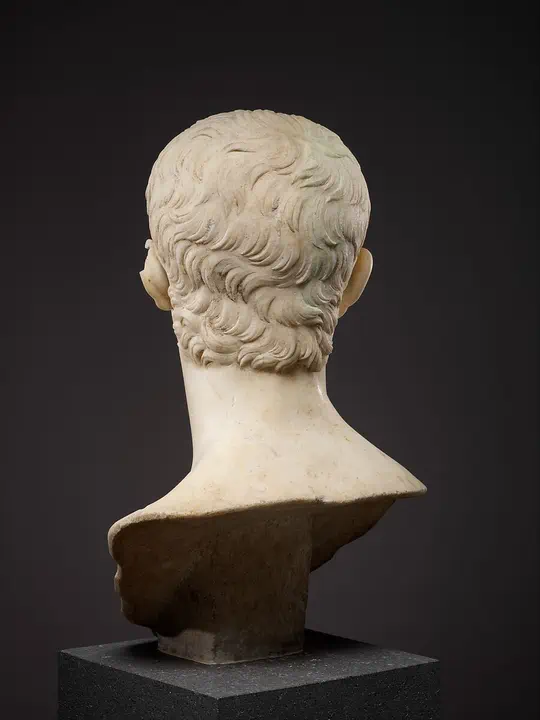
A haircut commonly seen on imperial portraits of the Roman Julio-Claudian emperors (i.e. Augustus, Tiberius, Caligula, Claudius, and Nero, reigning collectively from 27 CE to 68 CE), as well as subsequent rulers wishing to emulate them.
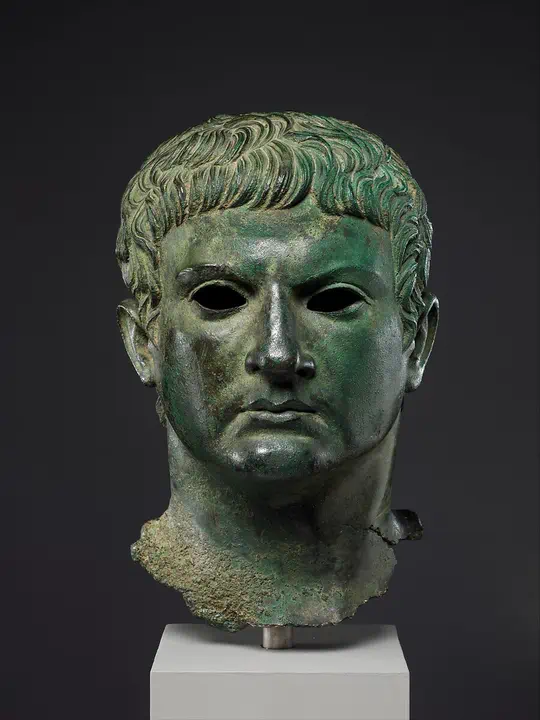
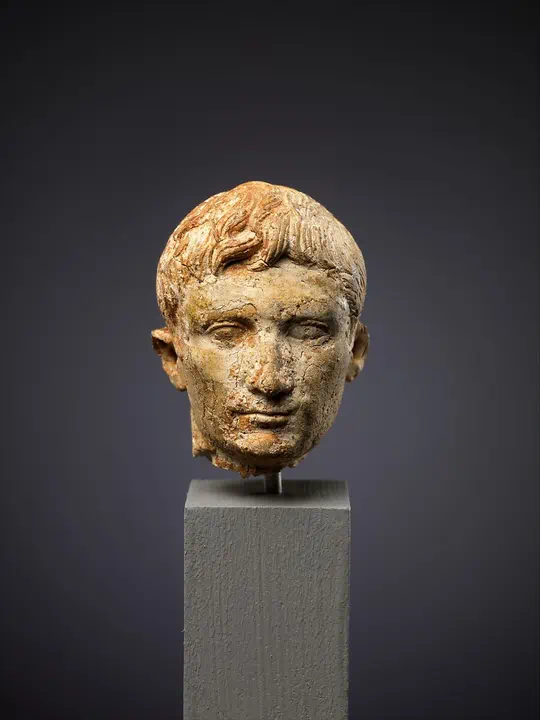
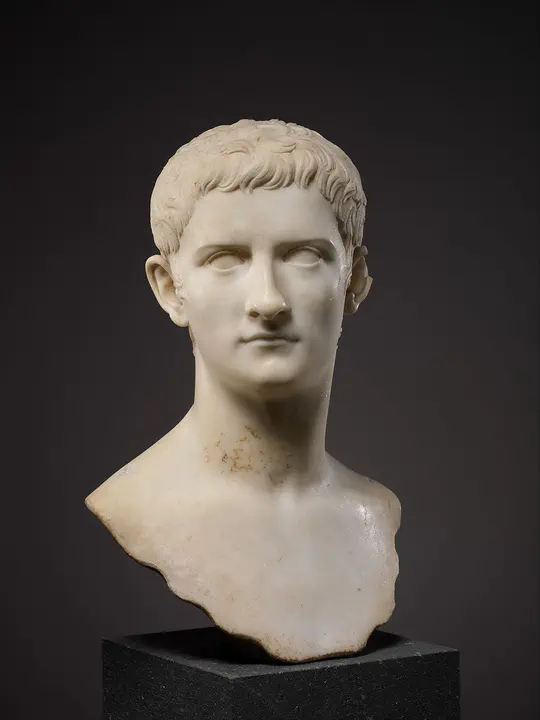
The haircut is characterised by the following features: Seen from the front:
"Comma-shaped" forelocks, terminating in a roughly straight line across the foreheard.
A small side-part, where the forelocks change direction, typically over one eye.
A "crab-claw" motif in the forelocks, typically seen over the nose (this is especially characteristic of Augustus).
Clean-shaven face.
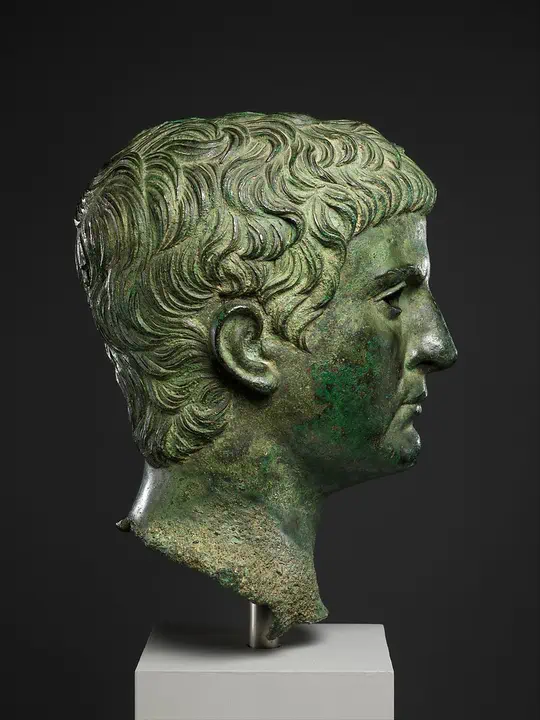
Seen from the side:
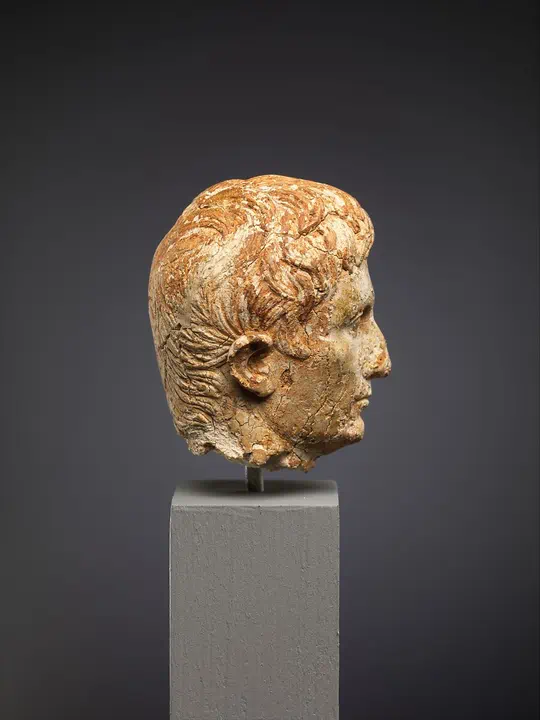
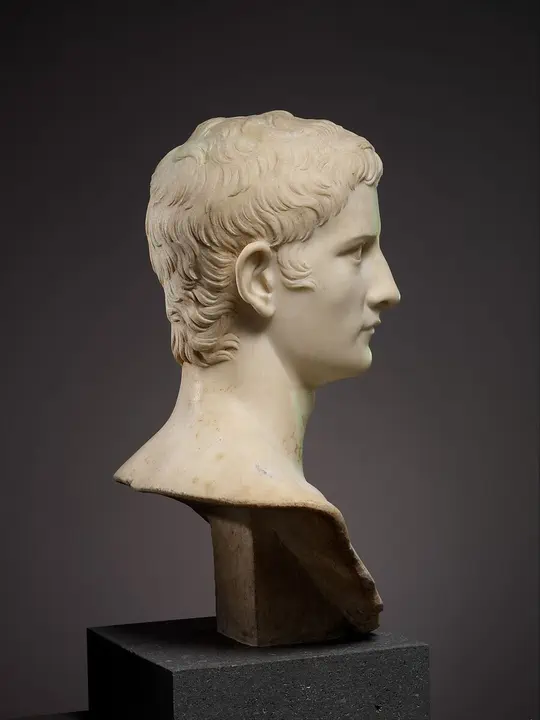
Thick sidelocks, hanging down to around the middle of the ear.
A set of locks pointing towards the back of the ear in a rough circle.
Seen from the back:
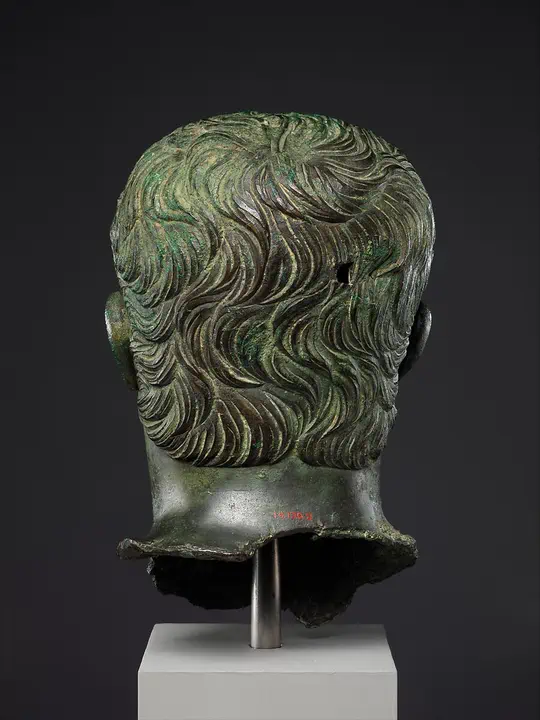
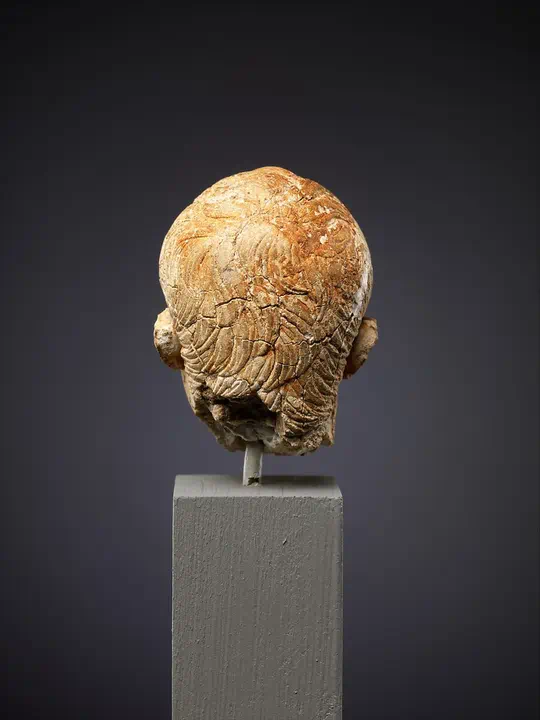
Star-shaped whirls in the hair, especially around the crown.
Hair terminating in the middle of the neck, roughly aligning with the bottom of the jaw.
The images below show this style in different views: Seen from the front:
Unknown Roman, front view
Augustus, front view. The thick forelocks in the middle of his hairline form the "crab-claw" motif.
Caligula, front view
Seen from the side:
Unknown Roman, side view.
Augustus, side view.
Caligula, side view.
Seen from the back:
Unknown Roman, back view. The "star-shaped" whirl of comma-shaped locks is clearly visible on the crown of the head.
Augustus, back view.
Caligula, side view.
All images from are from the Met Museum (objects 248892, 251411, and 248851). As part of the Met's Open Access policy, these images can be freely copied, modified, and distributed, even for commercial purposes.
The clean-shaven style began to fall out of use with Nero, who was depicted with a beard in later life. By the time of Hadrian (reign beginning in 117 CE), the imperial look had changed completely, and subsequent emperors were normally depicted with curled hair and a full beard.