
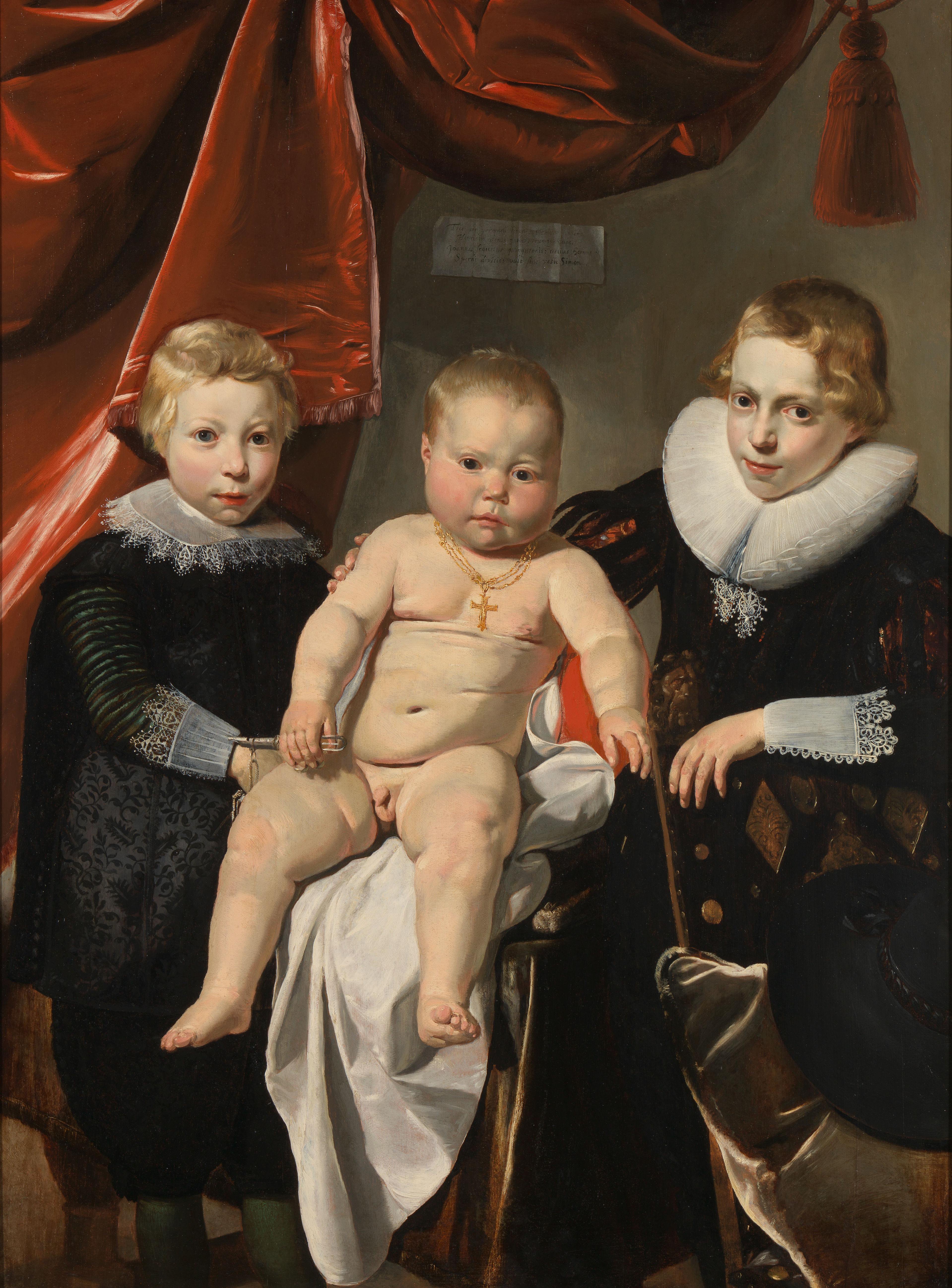
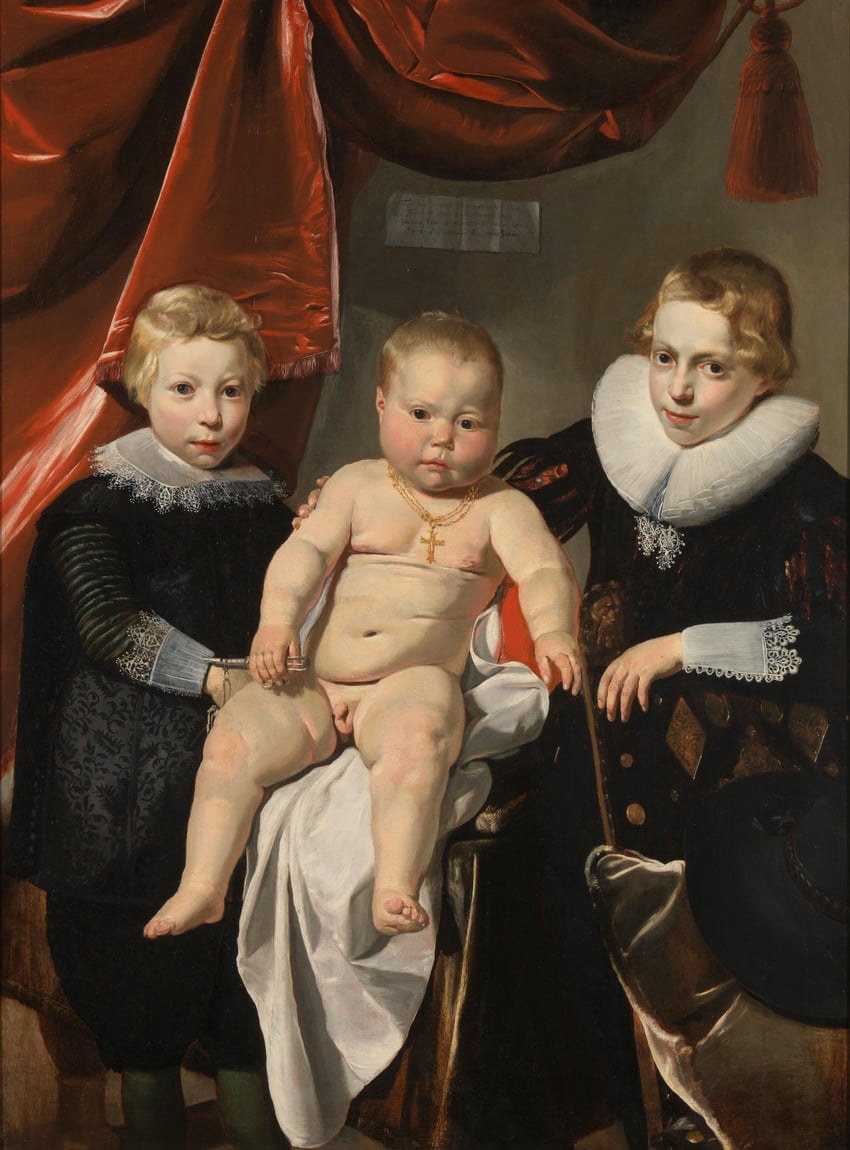
Group Portrait of Three Brothers, named Hendrick, Johannes and Simon
Catholics in the Dutch Republic were only allowed to practise their faith secretly and formed a minority. The three brothers portrayed here were Catholic. The cross around the neck of the youngest child, Simon, references the Catholic faith. That he is depicted nude was probably to inspire the beholder to imitate Christ in his sobriety and simplicity. He would die shortly after the painting was completed.
Thomas de Keyser, c. 1627 - c. 1632
height 121.5 cm x width 88.4 cm
Inscription, centre top on the cartellino:Tres ter germani senos implevimus annos: / Henricus denos natus, eramque duos. / Joannes sequitur quinquennis: tertius hornus. / Sperni divitias vult sine veste Simon.(Thrice six years between us have we, full brothers three. I, Henricus, was twelve, Johannes, the next, was five, and the third is from this year. He is Simon unclothed, for he wishes wealth to be spurned.)
Portret van Jan, Simon en Hendrick Verstegen
Katholieken mochten in de Republiek hun geloof alleen heimelijk belijden en vormden een minderheid. Deze drie broers zijn katholiek. Het kruisje om de hals van het jongste kind, Simon, verwijst naar het katholieke geloof. Hij is waarschijnlijk naakt weergegeven als aansporing om Christus na te volgen in zijn soberheid en eenvoud. Kort na voltooiing van het schilderij zou hij overlijden.
Thomas de Keyser, ca. 1627 - ca. 1632
drager: hoogte 121,5 cm x breedte 88,4 cm
Inscriptie, middenboven op het briefje: ‘Tres ter germani senos implevimus annos: / Henricus denos natus, eramque duos. / Joannes sequitur quinquennis: tertius hornus. / Sperni divitias vult sine veste Simon.’ (vertaling geleverd door C.L. Heesakkers, Leiden, 30 juli 1988.)