"The next stratum, Megiddo VII, disclosed the base of a statue of Ramses VI (about 1148-1142 BC). The treasure house of the royal palace of this city was found to contain a large number of ivory objects, discarded by the invaders who overwhelmed Megiddo in the mid-12th century BC. Outstanding among these is an ivory plaque, the "Celebration of Victory" (see the ivory with a seated figure and a harpist, below)." "This shows a Canaanite king sitting on his throne at a feast and leading prisoners who are naked but for their headdresses, which are similar to the ones used in Egyptian representations of the Beduins called Shosu. In an Egyptian letter (Papyrus Anastasi I from the time of Ramses II) there is a reference to the Wadi Ara near Megiddo which is "dangerous because of Beduins (Shosu) hidden under the bushes." The plaque may celebrate a successful raid against them."

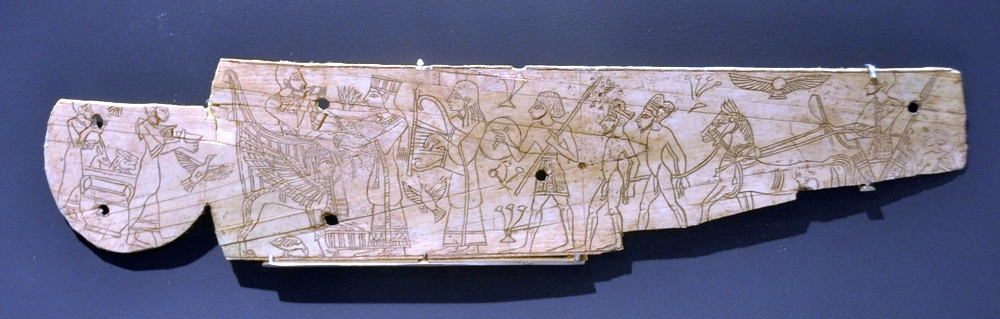
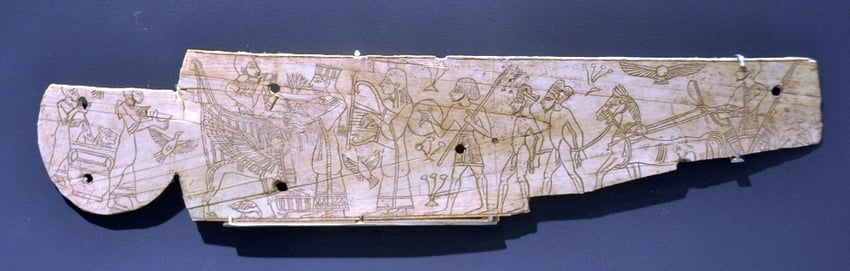
One of the Megiddo ivories
From bible-archaeology.info:
"The next stratum, Megiddo VII, disclosed the base of a statue of Ramses VI (about 1148-1142 BC). The treasure house of the royal palace of this city was found to contain a large number of ivory objects, discarded by the invaders who overwhelmed Megiddo in the mid-12th century BC. Outstanding among these is an ivory plaque, the "Celebration of Victory" (see the ivory with a seated figure and a harpist, below)."
"This shows a Canaanite king sitting on his throne at a feast and leading prisoners who are naked but for their headdresses, which are similar to the ones used in Egyptian representations of the Beduins called Shosu. In an Egyptian letter (Papyrus Anastasi I from the time of Ramses II) there is a reference to the Wadi Ara near Megiddo which is "dangerous because of Beduins (Shosu) hidden under the bushes." The plaque may celebrate a successful raid against them."